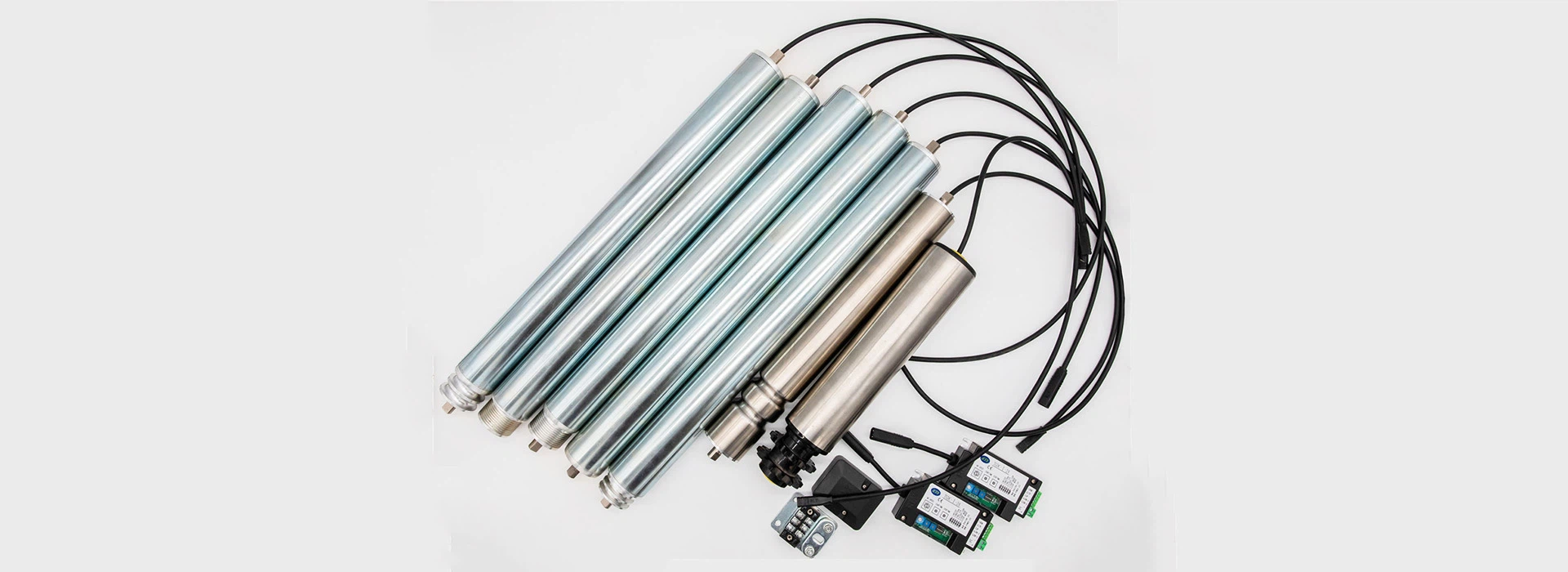
Brief Introduction to Conveyor Roller
Conveyor roller is an important part of conveyor (such as roller conveyor, power roller conveyor, etc.). During the working process of conveyor, the roller provides power or support by rotating, so that the material can be smoothly transported from one end to the other. They not only reduce the friction resistance of the material during the conveying process, but also improve the conveying efficiency.
Smooth Operation
The conveyor roller transmits materials by rolling, which has higher stability and efficiency than other transmission methods.
Continuous Operation
The conveyor roller can continuously transmit materials, reducing interruptions and waiting time, and improving production efficiency.
Strong Carrying Capacity
The conveyor roller is usually made of high-strength materials, which can withstand large loads and meet the transmission needs of various materials.
Strong Adaptability
Whether it is light or heavy materials, the conveyor roller can be adjusted and optimized as needed to ensure the stability and safety of transmission.
Flexibility And Diversity
The conveyor roller can be flexibly configured according to different production environments and process requirements, such as straight-line, turning, climbing, etc., to meet various complex transmission requirements. There are many types of conveyor rollers on the market, such as rubber rollers, steel rollers, stainless steel rollers, etc. Users can choose the appropriate type according to actual needs.
Easy To Maintain
The structure of the conveyor roller is relatively simple, easy to disassemble and install, and reduces maintenance costs and time.
Strong Durability
High-quality conveyor rollers have high wear resistance and corrosion resistance, can operate stably for a long time, and reduce the frequency of maintenance and replacement.
High Safety
The smooth transmission of the conveyor roller reduces the bumps and collisions of materials during transmission, reducing the risk of material damage.
Drum Body
The drum body is usually made of high-strength, wear-resistant materials such as steel, rubber, etc. to adapt to different working environments and material conveying needs. The diameter and length of the drum are determined according to the specific application scenario and design requirements. The diameter range can range from tens of millimeters to hundreds of millimeters, and the length is also adjusted according to the length and layout of the conveyor.
Bearing
The bearing is a key component of the drum, which is used to support the rotation of the drum and reduce friction. Common bearing types include ball bearings, roller bearings, etc. The specific selection depends on the load, speed and working environment of the drum. In order to prevent impurities such as dust and moisture from entering the bearing, the bearing usually adopts a sealing structure such as a double labyrinth seal.
Shaft
The shaft is the supporting component of the drum and is usually made of high-strength, wear-resistant materials such as cold-drawn round steel. The roundness, straightness and wall thickness tolerance of the shaft have high precision requirements to ensure a close fit with the bearing and stable operation of the drum.
End Cover
The end cover is used to close both ends of the drum to prevent materials and impurities from entering the drum, while protecting key components such as bearings and shafts. The design and structure of the end cover are determined according to the specific requirements of the drum, and are usually connected to the drum body by bolts or other means.
Carrying Rollers (Trough Rollers)
These rollers are used to carry the main (upper) branch of the conveyor belt and the material being transported. They are typically grooved to help guide and support the belt, with common groove angles of 35° and 45°. Grooved rollers are designed to reduce belt wear and ensure stable operation.
Return Rollers (Flat Rollers)
Return rollers support the return (lower) branch of the conveyor belt. They are typically flat and not grooved, as they do not need to guide the material being transported.
Impact Rollers
Impact rollers are designed to absorb the impact of falling material onto the conveyor belt. They are often used at the loading point of the conveyor system to protect the belt and rollers from damage.
Curved Rollers
Curved rollers are used in conveyor systems that require a change in direction, such as in curves or turns. They are designed to maintain the shape and tension of the belt as it moves around the curve.
Idler Rollers
Idler rollers are used to support the conveyor belt and reduce friction between the belt and the conveyor frame. They are typically positioned between carrying rollers and do not actively carry the material being transported.
Spiral Rollers
Spiral rollers have a spiral groove pattern on their surface, which helps to clean and drain the conveyor belt. They are often used in wet or sticky applications to prevent material build-up on the belt.
Disk Rollers
Disk rollers have a flat disk-shaped surface and are used in specific applications where a flat support surface is required. They are less common than other types of rollers but can be useful in certain situations.
Specialty Rollers
There are also various specialty rollers designed for specific applications, such as heat-resistant rollers for high-temperature environments or stainless steel rollers for food processing.
Load Capacity
Choose the appropriate roller load capacity according to the weight of the material to be conveyed. You need to consider the impact on the roller in situations such as starting, stopping, and emergency braking.
Diameter And Length
The diameter affects the roller’s load capacity and conveying efficiency. Larger diameters generally provide better stability and load capacity. Determine the length of the roller based on the width and layout of the conveyor belt.
Material
The roller body material, such as steel, stainless steel, aluminum alloy, nylon, etc., needs to be selected based on factors such as the chemical properties, temperature, and humidity of the material. Choose bearing materials suitable for the working environment to ensure long-term stable operation of the roller.
Speed And Drive Mode
Determine the roller speed based on the conveying speed and efficiency requirements. Drive modes include electric drive, hydraulic drive, pneumatic drive, etc., which need to be selected according to the specific application scenario.
Durability And Maintainability
Surface treatments such as galvanizing and painting can improve the corrosion resistance and wear resistance of the roller. Choose rollers that are easy to replace bearings, seals, and other components to reduce maintenance costs.
Environmental Factors
Consider the temperature range of the working environment and choose roller materials suitable for that temperature range. For wet or corrosive environments, choose rollers with appropriate protection measures.
Safety
When necessary, choose rollers with non-slip surfaces to prevent materials from sliding off. Make sure the conveying system has an emergency stop function to deal with unexpected situations.

Appearance Inspection
Check the appearance of the roller regularly to see if there are cracks, wear, deformation or corrosion. These signs may indicate that the roller needs to be replaced or repaired.
Bearing Inspection
Check whether the roller bearing is running smoothly, with no abnormal noise or overheating. Bearing damage will directly affect the operating efficiency and life of the roller.
Fastener Inspection
Check whether the fasteners (such as bolts, nuts, etc.) on the roller are loose or missing. Loose fasteners may cause the roller to fall off or be damaged during operation.
Clean Up Dust Accumulation
Regularly clean the dust and debris on the surface of the roller to keep the roller clean and running smoothly. Dust accumulation and debris may increase the friction resistance of the roller and reduce the conveying efficiency.
Lubricate The Bearing
Regularly add an appropriate amount of lubricant to the bearing according to the use of the roller and the manufacturer's recommendations. Lubricants can reduce friction and wear of the bearing and extend the service life of the bearing.
Timely Replacement
When the roller is found to have serious wear, cracks or deformation and other problems that cannot be repaired, it should be replaced with a new roller in time. Avoid using damaged rollers that may cause failure and downtime of the conveying system.
Application Of Conveyor Roller
Material Conveying
The conveyor roller is one of the core components of the conveying system. It conveys materials from one place to another by continuous rolling. This continuous conveying method greatly improves production efficiency and logistics speed. In complex conveying systems, conveyor rollers can help materials achieve direction conversion, such as turning, climbing, etc., to ensure that materials can be accurately conveyed along the predetermined route.
Production Line Automation
On automated assembly lines, conveyor rollers are often used in conjunction with automated equipment such as robots and sensors to achieve automatic grabbing, assembly and conveying of materials. This greatly improves the automation and production efficiency of production lines. In certain process treatments, such as spraying, drying, cooling, etc., conveyor rollers can ensure that materials are evenly heated or cooled during transportation, thereby ensuring the quality of process treatment.
Warehousing and Logistics
In warehouse management, conveyor rollers can be used for the warehousing, storage and outbound delivery of goods. Through automated conveying systems, the storage density and cargo turnover efficiency of warehouses can be greatly improved. In the field of logistics and transportation, conveyor rollers are one of the important equipment in places such as sorting centers, express companies and freight stations. They can help sort and deliver goods quickly and accurately, improving the efficiency and accuracy of logistics transportation.
We're well-known as one of the leading conveyor roller suppliers in China. If you're going to buy high quality conveyor roller at competitive price, welcome to get more information from our factory. Also, customized service is available.
(0/10)