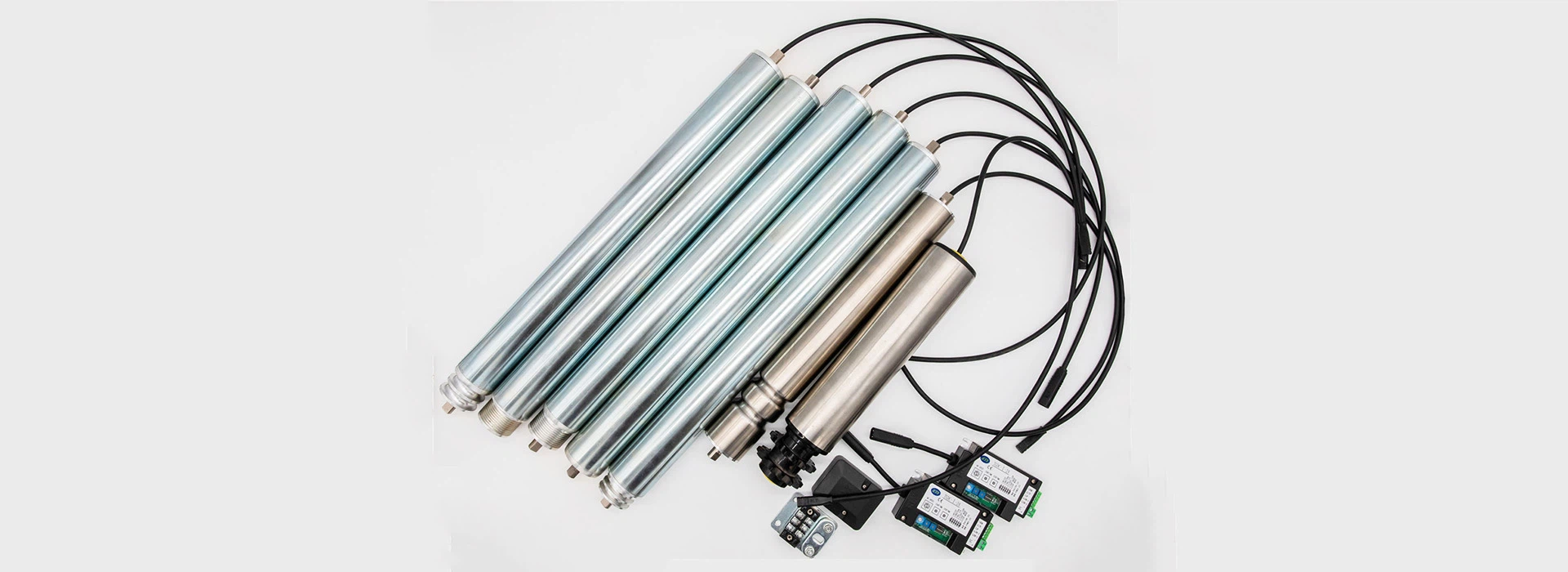
Motorised Roller

Dongguan Smart Automation Part Co., Ltd: Your Professional Motorised Roller Supplier!


Dongguan Smart Automation Components Co., Ltd. was established in 2002, located in Dongguan City, the world’s factory center, with a production center of more than 8600 square meters. Smart focuses on the R&D and production of automation components, especially drum motors, precision gears, conveyor rollers, conveyor roller bearings, etc. So far, we have our own brand Srollmart, which enjoys a good reputation in the automation industry.


Wide Range of Products
Our main products include drum motor, motorised roller, conveyor roller, conveyor system, roller conveyor sorter, roller track and ball transfer unit. Our products are repeatedly tested before leaving the factory, such as waterproof test, operation test, bearing test, etc. In terms of sales, Smart’s products have been sold to Southeast Asia, Europe, America, and Oceania. In China, Smart also has a certain market share.


Leading Service
We have many years of industry experience and a complete production management, quality supervision and sales service operation system. If you want to buy motorised roller, just send your needs by email and we can respond to you as soon as possible.


Professional Team
There are 202 employees and 32 R&D team members. The team is experienced, including 26 technicians with more than 20 years of experience in electric rollers and 63 technicians with more than 10 years of experience in automation components. As an enterprise that has been tempered for many years, we combine technology and technology to continuously innovate, so that each product is rigorously tested and quality checked.


Advanced Equipment
Our factory is equipped with processing machines of CNC lathe, Japan kashifuji CNC gear hobbing machine, stamping machine, automatic welding machine to meet production needs.

Brief Introduction to Motorised Roller


Motorised roller is a device that has a motor built inside the roller. This design allows the roller to be driven directly by the motor to rotate, thereby achieving material conveying, accumulation or other operations.


Features of Motorised Roller
 
01/

Automation And Efficiency
Motorised roller can realize automatic operation without manual continuous pushing or rotation, which greatly improves work efficiency.

02/

Precise Control
The motor-driven roller can achieve precise position control through the control system to ensure that the roller stops at the specified position to meet the needs of precise operation.

03/

Low Noise Operation
The motorised roller with low noise design produces less noise during operation, which is conducive to creating a more comfortable working environment.

04/

Safety Protection
Many motorised rollers are equipped with safety protection devices such as airbags, photoelectric sensors, etc., which can automatically stop or reverse when encountering obstacles to ensure safe operation.

05/

Strong Durability
Key components such as motors and rollers are made of high-quality materials and undergo strict quality control and testing to ensure that motorised rollers have a long service life and stable performance.

06/

Wide Range Of Applications
Motorised rollers are widely used in food, chemical, textile, electronics, supermarkets, refrigeration, logistics, warehousing and other fields due to their unique advantages.


Parts of Motorised Roller

Motor
The motor is the core component that drives the roller to rotate and provides the necessary power. Common motor types include DC motors, AC motors, and more advanced brushless DC motors. Different types of motors have different performance and characteristics and are suitable for different application scenarios.


Transmission Mechanism
The transmission mechanism is responsible for transmitting the power of the motor to the roller so that it can rotate. The transmission mechanism may include components such as gears, chains, belts, etc., depending on the design and application requirements. The design of the transmission mechanism should ensure the efficiency and stability of power transmission while reducing wear and noise.


Roller Body
The roller body is usually made of strong and durable materials such as metal (such as stainless steel, aluminum alloy, etc.) or polymer materials (such as nylon, polyurethane, etc.) to withstand the weight of the material and the force during rotation. The roller body may include parts such as the shaft, bearings, hubs, and wheel surfaces, and the specific structure depends on the application requirements. In order to increase the wear resistance, corrosion resistance, and sliding resistance of the roller, the surface of the roller body may be specially treated, such as coating with a wear-resistant coating, spraying with anti-rust paint, etc.


Control System
The control system is used to realize the control functions of starting, stopping, and speed regulation of the motorized roller. The control system may include components such as controllers, sensors, switches, and corresponding control software and algorithms.


Safety Protection Devices
Safety protection devices are used to protect the safety of operators and equipment and prevent accidents. Safety protection devices may include safety switches, airbags, photoelectric sensors and other components. When abnormal conditions (such as obstacles, overloads, etc.) are detected, the safety protection device will immediately initiate protective measures (such as stopping operation, reversing, etc.).


Brackets And Mounting Components
Brackets and mounting components are used to fix and support the motorised roller to ensure its stable operation. Brackets and mounting components may include mounting plates, fixing screws, adjustment gaskets and other components. These components should be designed and selected according to the actual application scenario to ensure that the motorised roller is installed firmly and reliably.


Types of Motorised Roller
 

Drive Rollers
Drive rollers are typically used in conveyor systems to provide the primary driving force for moving materials. They are connected to a motor and transmit the rotational force to the idler rollers (or passive rollers) through a chain, belt, or other transmission mechanism. Drive rollers can be powered by various types of motors, including electric motors, hydraulic motors, or pneumatic motors.


Powered Conveyor Rollers
Powered conveyor rollers are designed specifically for use in conveyor systems. They are commonly used in warehouses, distribution centers, and manufacturing facilities to move pallets, cartons, and other materials efficiently. These rollers can be configured in various layouts, including straight, curved, or inclined, to suit the specific needs of the application.


Zone Control Rollers
Zone control rollers are a type of motorised roller that allows for independent control of sections (or zones) of a conveyor system. This enables operators to start, stop, or adjust the speed of specific rollers within the system, providing greater flexibility and efficiency. Zone control rollers are often used in sorting systems, where products need to be directed to different paths based on specific criteria.


Accumulation Rollers
Accumulation rollers, also known as backpressure rollers, are used in conveyor systems to accumulate or buffer products. They are designed to allow products to accumulate on the conveyor without damaging them or causing backups. Accumulation rollers typically have sensors that detect the presence of products and adjust the roller speed accordingly, ensuring a smooth and controlled flow of materials.


Specialty Rollers
There are also many specialty types of motorised rollers designed for specific applications. For example, some rollers are coated with rubber, PVC, or other materials to provide additional grip or resistance to wear and tear. Other specialty rollers may include features such as variable speed control, reverse rotation, or built-in brakes to meet the unique requirements of the application.


How To Choose Motorised Roller?


Load Capacity
Determine the maximum weight that the electric roller needs to carry to ensure that it can operate stably and withstand the load during work. Consider the nature of the load, such as whether it is fragile and whether it needs to be transported smoothly, so as to select the appropriate type of electric roller.


Power Requirements
Determine the required motor power based on factors such as conveying speed, load weight and conveying distance. According to the speed requirements of the production line, select an electric roller with a corresponding speed.


Precision And Stability
For occasions where precise control of the conveying position is required, an electric roller with high-precision control capabilities should be selected. Ensure that the electric roller can remain stable during operation and reduce vibration and noise.


Maintenance And Maintenance
Choose an electric roller that is easy to disassemble, repair and replace parts to reduce maintenance costs.


Safety
Ensure that the electric roller has necessary safety protection devices, such as overload protection, overheating protection, etc. Choose an electric roller that is easy to operate and easy to control to improve work efficiency and reduce operating risks.

Motorised AC Drum Roller


How To Maintain Motorised Roller?
 
01/

Regular Inspection
Regularly check the appearance of the electric drum to see if there are any signs of damage, deformation or corrosion. Observe the state of the electric drum during operation and pay attention to any abnormal vibration, noise or heating.

02/

Clean Dust And Dirt
Regularly clean the dust and dirt on the surface of the electric drum to prevent it from affecting heat dissipation and normal operation.

03/

Lubrication
Regularly add an appropriate amount of lubricating oil or grease to the bearings and other parts of the electric drum that need lubrication according to the manufacturer's recommendations.

04/

Check The Power Cord And Cable
Make sure that the power cord and cable are not damaged, aged or exposed to prevent electrical failures and safety accidents.

05/

Check The Motor
Regularly check the operating status of the motor, including the temperature, vibration and noise of the motor, to ensure that it is within the normal range.

06/

Check The Surface Of The Drum
Check whether the surface of the drum is flat and smooth. If there is wear or dents, it should be repaired or replaced in time.


Application Of Motorised Roller


Logistics and Transportation
Electric rollers are often used in automated conveying systems in warehouses and distribution centers for fast and efficient handling and sorting of goods. They can be integrated into conveyor belts, sorting lines or automated high-bay warehouses to improve logistics efficiency. In the express and postal industries, electric rollers are used for automated sorting and conveying of parcels and letters, speeding up processing and reducing human errors.


Manufacturing
In the manufacturing industry, electric rollers are an important part of production line automation. They can drive conveyor belts, assembly lines or workbenches to achieve continuous and stable conveying of parts and products, improving production efficiency. During processing and assembly, electric rollers can be used for positioning and conveying materials to ensure processing accuracy and assembly quality.


Airports and Ports
At airports, electric rollers are one of the key components of baggage handling systems. They drive conveyor belts and sorting systems to transport baggage from the boarding gate to the aircraft or baggage claim area, achieving fast and accurate handling of baggage. At ports, electric rollers are used for loading, unloading and conveying of goods such as containers and bulk cargo, improving port operating efficiency and throughput.


Energy and Mining
In the energy and mining industries, electric rollers are used in the conveying system of bulk materials such as coal and ore to achieve continuous and efficient material transportation.


Agriculture
In the agricultural field, electric rollers can be used in the transportation and processing of agricultural products such as grain and crops to improve agricultural production efficiency.


Public Facilities
In public facilities such as airport security and subway security, electric rollers are also used for the transportation and inspection of luggage, parcels and other items.


Frequently Asked Questions

Q: What is motorised roller?

A: Motorised roller is a driving device that combines a motor and a roller. It is equipped with a motor inside, which drives the roller to rotate, thereby driving the conveyor belt or material to move. The electric roller has the advantages of compact structure, high transmission efficiency, low noise, and easy maintenance. It is widely used in logistics, manufacturing, mining, ports and other fields.

Q: What is the working principle of the motorised roller?

A: The working principle of the motorised roller is relatively simple. When the motor is powered on, the motor generates a rotational torque, which is transmitted to the roller through a transmission device (such as gears, chains, etc., or directly through the shaft), causing the roller to start rotating. The rotation of the roller then drives the conveyor belt or material to move, realizing the conveying function.

Q: How to choose a suitable motorised roller?

A: Load capacity: According to the weight, volume and density of the conveyed material, select a motorised roller with sufficient load capacity.
Conveying speed: According to the speed requirements of the production line, select a motorised roller with a corresponding speed.
Working environment: Consider the temperature, humidity, corrosiveness and other factors in the working environment, and select a motorised roller suitable for the environment.
Precision and stability: For occasions where the conveying position needs to be precisely controlled, a motorised roller with high precision and stability should be selected.

Q: What are the precautions for the maintenance of motorised rollers?

A: Regular inspection: Regularly check the appearance, operating status and electrical connection of the motorised roller, etc., to promptly discover and deal with potential problems.
Cleaning and maintenance: Regularly clean the dust and dirt on the surface of the motorised roller to keep it clean and heat dissipating.
Lubrication: According to the manufacturer’s recommendations, regularly add an appropriate amount of lubricating oil or grease to the bearings and other components of the motorised roller.
Electrical system inspection: Check whether the power cord and cable are intact and whether the motor is operating normally to avoid electrical failures and safety accidents.

Q: What are the main uses of motorised roller?

A: Conveyor Systems: Motorised rollers are widely used in conveyor systems to move materials and products along a designated path. They are particularly suitable for applications requiring dynamic acceleration and deceleration of loads.
Assembly Lines: In manufacturing and assembly lines, motorised rollers facilitate the smooth and efficient movement of parts and products, enhancing productivity and reducing manual handling.
Warehousing and Distribution: In warehouses and distribution centers, they are used to transport goods between different storage areas, packing stations, and loading docks.
Packaging Lines: For packaging and sorting operations, motorised rollers help in aligning, spacing, and transporting products to ensure seamless integration with other packaging equipment.

Q: What factors affect the durability of motorised roller?

A: Material Quality: The quality of materials used in the construction of motorised rollers, including the bearings, rollers, and motor components, significantly impacts their durability. High-quality materials are more resistant to wear and tear, ensuring longer service life.
Load Capacity and Usage: The load capacity of the roller and the frequency of usage play a crucial role in determining its durability. Overloading or continuous heavy-duty use can lead to premature wear and failure.
Operating Environment: The operating environment, including temperature, humidity, and the presence of corrosive substances, can adversely affect the rollers' durability. Harsh environments accelerate wear and corrosion, reducing the roller's lifespan.
Lubrication: Proper lubrication is essential for maintaining the smooth operation of motorised rollers and reducing friction-induced wear. Insufficient or contaminated lubrication can lead to increased wear and shortened service life.
Maintenance: Regular maintenance, including cleaning, lubrication, and inspection, is critical for ensuring the long-term durability of motorised rollers. Neglecting maintenance can lead to the accumulation of dirt, debris, and wear particles, further accelerating wear and tear.
Design and Manufacturing Quality: The design and manufacturing quality of the motorised roller also contribute to its durability. A well-designed roller with precision manufacturing ensures optimal performance and reduced wear, while poor design and manufacturing can lead to premature failure.

Q: What are the advantages and disadvantages of motorised roller?

A: Advantages: Motor-driven rollers transport items quickly and continuously, significantly improving the efficiency of the production line. Through electric drive, the rollers can operate stably, reducing inefficiency caused by improper manual operation. The motorised roller is easy to integrate into the automation system to achieve fully automated control of the production line. Automated control can reduce manual intervention, reduce labor costs, and improve the stability and reliability of the production line. The motor-driven rollers can be customized according to actual needs and are suitable for transporting goods of different sizes, weights and shapes. Motor driven rollers usually use high-quality motors and transmission components, which have high reliability and durability.
Disadvantages: Motor-driven rollers require a stable power supply to function properly. In the case of unstable power supply or power outage, the motor-driven roller will not be able to operate, which may affect the normal operation of the production line.

Q: What material is the motorised roller made of?

A: Roller: The outer layer of the roller is often made of wear-resistant and durable materials, such as polyurethane (PU), rubber, etc. These materials have good wear resistance, tear resistance and corrosion resistance, and can adapt to various working environments and load requirements. The inner layer may use structural materials such as metal or hard plastic to provide sufficient strength and support.
Motor and transmission parts: The motor part of the motor-driven roller usually uses high-quality DC motors or AC motors, which are made of metal (such as iron, aluminum, etc.) and electromagnetic materials (such as copper wire, magnets, etc.). Transmission parts such as gears and bearings are also made of wear-resistant and durable metal materials to ensure the stability and reliability of the transmission.
Brackets and connecting parts: The brackets and connecting parts of the motorised roller are usually made of metal (such as stainless steel, aluminum alloy, etc.), which have sufficient strength and rigidity to support the entire drive roller and withstand various loads.

Q: How to prevent motorised roller from rusting?

A: When manufacturing the motorised roller, you can choose high-quality materials that are corrosion-resistant and oxidation-resistant, such as stainless steel, aluminum alloy, etc., to improve its corrosion resistance. You can also apply anti-rust oil on the surface of the motor drive roller to form a protective film to prevent moisture and corrosive substances from contacting the metal, thereby effectively preventing rust. In addition, you can also regularly maintain the motor drive roller, including cleaning the surface dirt, checking and replacing severely worn parts, and performing anti-rust treatment, etc., to extend its service life and reduce the possibility of rust.

Q: What factors affect the service life of a motorised roller?

A: The manufacturing material of the motorised roller has a direct impact on its service life. High-quality materials, such as stainless steel, aluminum alloy, etc., have better corrosion resistance and wear resistance, which can extend the service life of the motor drive roller. The quality of the manufacturing process also directly affects the quality of the motor drive roller. The sophisticated manufacturing process can ensure the accuracy and durability of the motorised roller, thereby increasing its service life.

We're well-known as one of the leading motorised roller suppliers in China. If you're going to buy high quality motorised roller at competitive price, welcome to get more information from our factory. Also, customized service is available.

Rulmeca Drum Motor Equivalent, , Belt Drive Grooved Roller

(0/10)

clearall