Brief Introduction to Expandable Conveyor
Expandable conveyor is a conveyor system whose design allows its length, width or shape to be adjusted or expanded within a certain range. This type of conveyor is usually used in scenarios that require flexibility in responding to different conveying needs or space constraints.
High Flexibility
The retractable conveyor can freely adjust its length within a certain range to meet the needs of different occasions and goods. This flexibility allows it to be used in environments with limited space, and it is also convenient for quick adjustment as needed.
Space Saving
Due to its retractable characteristics, the conveyor can be shortened to the minimum length when it is not needed, thus saving storage space. This is especially important for environments with tight space resources such as warehouses and workshops.
Improve Work Efficiency
The retractable conveyor can quickly and accurately complete the task of conveying goods, reduce the need for manual handling, and thus improve work efficiency. At the same time, its continuous and smooth conveying method also helps to reduce the damage and loss of goods during the conveying process.
Reduce Labor Intensity
The use of retractable conveyors can greatly reduce the labor intensity of workers and reduce the physical harm of repetitive labor to workers. Workers only need to operate the control equipment to complete the conveying task, so that they have more energy to focus on other work.
Strong Adaptability
The retractable conveyor is suitable for a variety of goods and occasions. Whether it is cartons, parcels or other types of goods, the width, height and speed of the conveyor can be adjusted to meet the needs. In addition, it can also be used in conjunction with other conveying equipment to form a complete conveying system.
Easy Maintenance And Upkeep
Most retractable conveyors adopt modular design, which makes maintenance and upkeep more convenient. When a component fails, it can be quickly replaced or repaired, thus reducing the impact of downtime on production.
Frame and Support Structure
The frame provides stability and support for the overall structure and is usually made of strong steel or aluminum alloy. Support structures such as legs and rollers are used to fix and adjust the height and position of the conveyor.
Conveyor Belt
In a belt-type retractable conveyor, the conveyor belt is the main component for carrying and conveying goods. It is usually made of wear-resistant and oil-resistant synthetic materials.
Roller
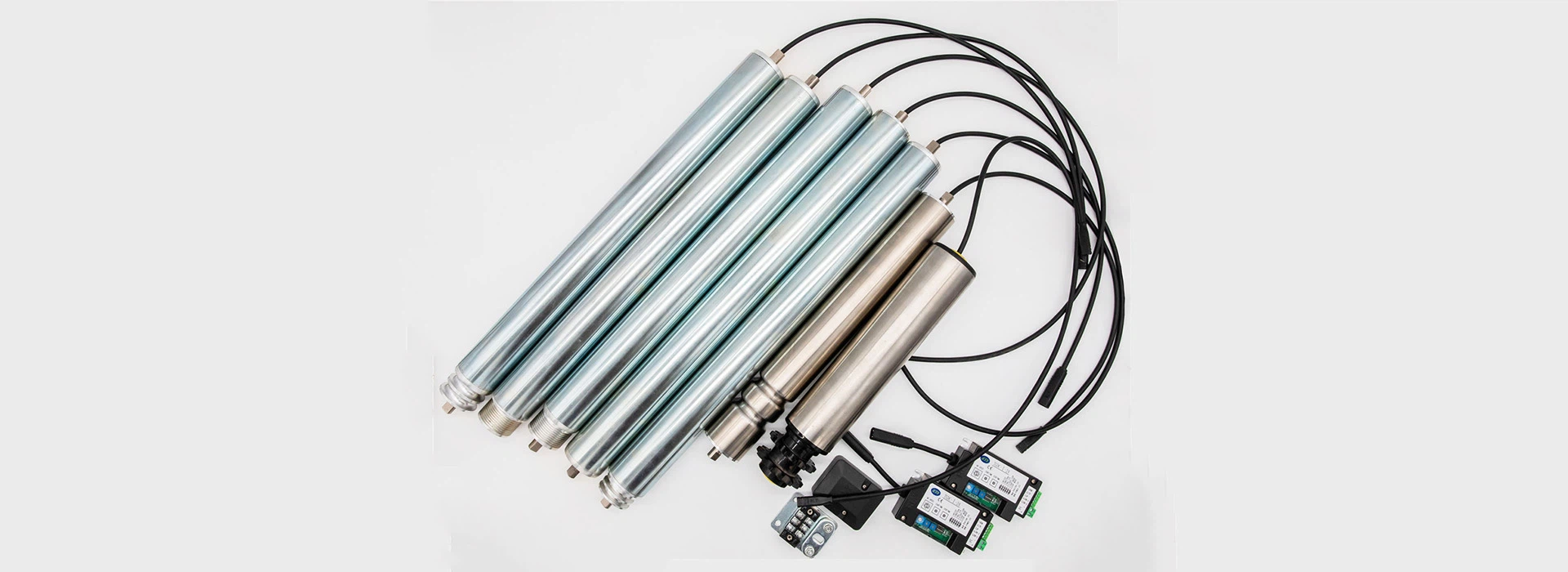
In a roller-type retractable conveyor, the roller drives the goods forward by rotating. It is usually made of metal and equipped with bearings and transmission devices.
Motor
The motor can provide power to drive the conveyor belt or roller. The motor is usually used in conjunction with components such as reducers and couplings to achieve smooth and efficient drive.
Transmission Device
Transmission devices such as belt drives and chain drives are used to transfer the power of the motor to the conveyor belt or roller.
Control Cabinet
The control cabinet contains electrical components and control circuits for controlling the start, stop, speed regulation and other functions of the conveyor.
Operation Interface
The operation interface such as buttons and touch screens is used for human-computer interaction to facilitate operators to control the conveyor.
Telescopic Components
Telescopic components such as telescopic arms and telescopic joints are key components for achieving adjustable conveyor length. Telescopic components usually adopt structures such as slide rails, sliders, and connecting rods to achieve smooth and reliable telescopic movement.
Locking Device
The locking device is used to lock the telescopic component after the conveyor is adjusted to the required length to ensure the stability and safety of the conveyor.
Emergency Stop Button
In an emergency, the operator can press the emergency stop button to quickly stop the operation of the conveyor.
Types of Expandable Conveyor
Powered Roller Telescopic Conveyor
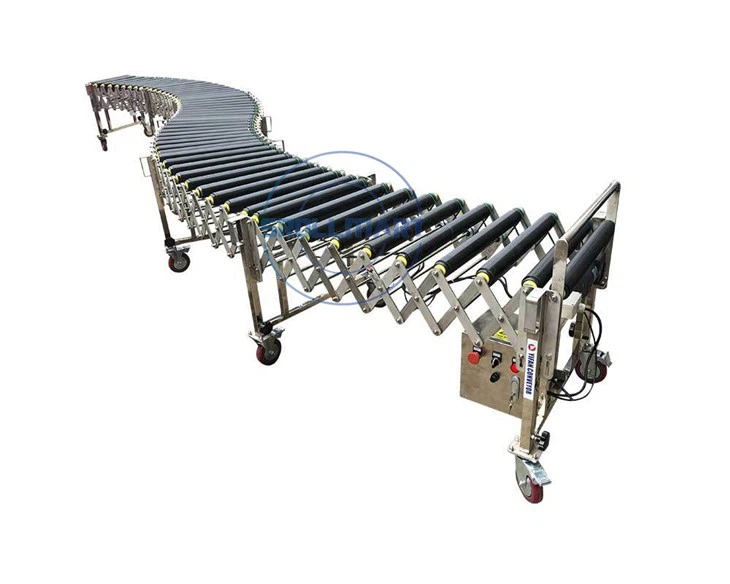
This conveyor realizes the conveying function by driving the roller with an electric motor. The roller and the conveyor belt can be telescopically adjusted in length and angle within a certain range. It is suitable for occasions where the conveying distance and angle need to be flexibly adjusted, such as production lines, warehouses, etc.
Telescopic Arm Conveyor
The telescopic arm conveyor has a telescopic arm structure, which can adjust the conveying distance and angle as needed. The arm is usually made of high-strength materials to ensure load-bearing capacity and stability. It is suitable for scenarios where obstacles need to be crossed or long-distance conveying is required, such as logistics centers, docks, etc.
Modular Retractable Conveyor
The modular retractable conveyor consists of multiple independent conveying units, each of which can be expanded or contracted as needed. The units are connected by connectors or slide rails to adjust the overall length. It is suitable for occasions where the length or layout of the conveyor line needs to be adjusted frequently, such as automobile production lines, electronic product assembly lines, etc.
Telescopic Belt Conveyor
The conveyor belt can be telescopic within a certain range to adapt to different lengths of goods or conveying distances. The conveyor belt is usually made of wear-resistant and oil-resistant synthetic materials with good load-bearing capacity and durability. It is widely used in mining, metallurgy, building materials and other industries for the transportation and transfer of materials.
Telescopic Chain Plate Conveyor
The telescopic chain plate conveyor uses chain plates as load-bearing components. The chain plates can circulate under the drive of the drive device to realize the transportation of goods. Chain plate conveyors have strong load-bearing capacity and stability, and are suitable for conveying heavy or fragile goods. It is commonly used in industries such as food processing and pharmaceutical packaging for the automated transportation and packaging of products.
Flexible Retractable Conveyor
This type of conveyor uses flexible materials to make conveyor belts or conveyor surfaces, which can bend and retract according to changes in the conveying path. Flexible conveyors usually have a small turning radius and high flexibility. It is suitable for occasions that require complex conveying paths or limited space, such as automated warehouses, stereoscopic warehouses, etc.
Load Capacity
You can choose the appropriate load capacity based on the weight, volume and density of the goods being transported. Make sure the conveyor can stably and reliably transport the maximum load required.
Conveying Speed
You should determine the appropriate conveying speed based on production or logistics needs. Faster conveying speeds can improve efficiency, but may also affect the stability of the goods.
Conveying Distance And Layout
You should ensure that the telescopic range of the selected conveyor can meet actual needs, including maximum and minimum lengths. You also need to consider whether the conveyor can be flexibly laid out within the existing site, including the ability to turn, climb slopes or cross obstacles.
Cleaning And Maintenance
You need to consider the convenience of cleaning and maintenance of the conveyor, and whether special tools or equipment are required.
Performance And Reliability
You can choose a conveyor with stable operation to reduce failures and downtime. You need to consider the service life and wear resistance of the conveyor to ensure long-term economic benefits. You need to ensure that the conveyor meets relevant safety standards and regulatory requirements and has necessary safety protection devices and warning signs.
Regular Inspection And Maintenance
Regularly inspect the various parts of the conveyor, including the motor, transmission, conveyor belt or roller, etc. Clean the dust and debris on the conveyor to keep it in good operating condition.
Lubrication And Maintenance
Regularly lubricate the parts that need lubrication to reduce wear and friction. Check the amount and quality of the lubricant to ensure that it meets the requirements.
Replace Worn Parts
Timely find and replace severely worn parts, such as conveyor belts, roller bearings, etc. Store spare parts for quick replacement when needed.
Adjustment And Calibration
Adjust the length, angle and speed of the conveyor as needed. Calibrate the conveyor control system to ensure its accuracy and stability.
Logistics Industry
Retractable conveyors are used in warehouses for the warehousing, storage, outbound and sorting of goods. It can flexibly adjust the conveying path and length according to the warehouse layout and cargo demand to improve warehouse operation efficiency. It can achieve fast and accurate delivery of goods, reduce manual operations and reduce error rates by combining with automated warehousing systems. In large logistics centers, retractable conveyors are used to connect different operating areas, such as receiving areas, storage areas, picking areas and shipping areas. It can handle the continuous delivery of large quantities of goods and improve the throughput capacity and operating efficiency of logistics centers. During the transportation of goods, retractable conveyors can be used for loading and unloading of goods and short-distance transportation, such as transfer from trucks to warehouses.
Production Industry
In production lines, retractable conveyors are used for the transmission of parts, semi-finished products and finished products. It can adjust the conveying direction and speed according to the layout and process requirements of the production line to ensure the smooth progress of the production process. By combining with an automated control system, it can realize the intelligent and automated production of the production line, improve production efficiency and product quality. On the packaging line, retractable conveyors are used to transport packaged products to the next process or packaging box. It can adjust the width and height of the conveyor according to the size and weight of the packaged product to ensure stable transportation of the product.
Airport And Transportation Field
In the airport baggage conveying system, the retractable conveyor is used to transport passengers’ luggage from the check-in counter to the security check area, boarding gate and other destinations. It can adjust the length and speed of the conveyor according to the layout and passenger flow of the airport to improve the efficiency and accuracy of luggage transportation. In transportation hubs such as railway stations and subway stations, retractable conveyors can be used for the rapid transfer of goods and the transportation of passengers’ luggage. It can improve the operating efficiency of transportation hubs and the travel experience of passengers.
Food Industry
In the food industry, retractable conveyors are used for the transportation of food raw materials, semi-finished products and finished products. It can meet the hygiene and safety requirements in the food production process and ensure the quality and safety of food.
Pharmaceutical Industry
In the pharmaceutical industry, retractable conveyors are used for the packaging, transportation and storage of medicines. It can meet the high requirements of the pharmaceutical industry for cleanliness, stability and accuracy to ensure the quality and safety of medicines.
Heavy Manufacturing Industry
In the heavy manufacturing industry, retractable conveyors are used for the transportation of heavy parts and raw materials. It has high load-bearing capacity and stability, and can adapt to heavy-load and high-intensity working environments.
We're well-known as one of the leading expandable conveyor suppliers in China. If you're going to buy high quality expandable conveyor at competitive price, welcome to get more information from our factory. Also, customized service is available.
Expandable Conveyor, Expandable Synchronous Belt Conveyor, Expandable Grooved Conveyor(0/10)