




What is the speed regulation method of a Tapered Drum Motor?
 Sep 25, 2025|
 What is the speed regulation method of a Tapered Drum Motor?
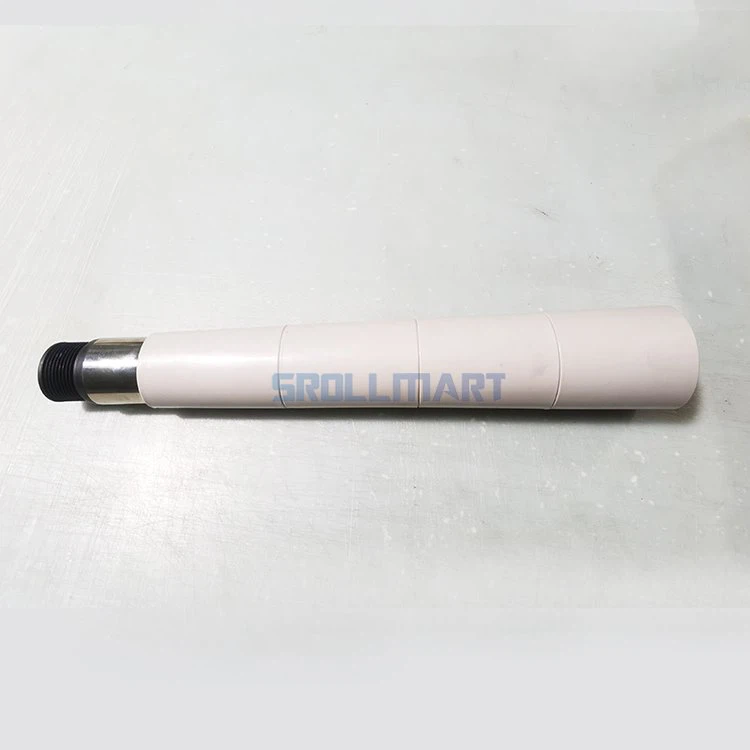
As a leading supplier of Tapered Drum Motors, I'm often asked about the speed regulation methods of these motors. Tapered Drum Motors are widely used in various industries, such as food processing, logistics, and packaging, due to their compact design, high efficiency, and reliable performance. Understanding the speed regulation methods is crucial for optimizing the operation of conveyor systems and other applications that utilize these motors.
Variable Frequency Drives (VFDs)
One of the most common and effective speed regulation methods for Tapered Drum Motors is the use of Variable Frequency Drives (VFDs). A VFD is an electronic device that controls the speed of an AC motor by varying the frequency and voltage supplied to the motor. By adjusting the frequency, the VFD can change the speed of the motor over a wide range, providing precise control and energy savings.
The operation of a VFD is based on the principle that the speed of an AC motor is directly proportional to the frequency of the power supply. By increasing or decreasing the frequency, the VFD can increase or decrease the motor speed accordingly. In addition to speed control, VFDs also offer other benefits, such as soft-start and soft-stop capabilities, which reduce mechanical stress on the motor and conveyor system, and energy savings by allowing the motor to operate at the most efficient speed for the application.
When using a VFD with a Tapered Drum Motor, it's important to select a VFD that is compatible with the motor's power rating and specifications. The VFD should also be properly installed and configured to ensure optimal performance and reliability. Some VFDs also offer advanced features, such as programmable speed profiles, torque control, and communication interfaces, which can further enhance the functionality and flexibility of the motor control system.

Eddy Current Clutches
Another speed regulation method for Tapered Drum Motors is the use of Eddy Current Clutches. An Eddy Current Clutch is a mechanical device that uses electromagnetic induction to transfer torque from the motor to the load. The clutch consists of a stator, which is connected to the motor, and a rotor, which is connected to the load. When the stator is energized, it creates a magnetic field that induces eddy currents in the rotor, causing the rotor to rotate and transfer torque to the load.
The speed of the load can be controlled by adjusting the amount of current supplied to the stator. By increasing or decreasing the current, the strength of the magnetic field and the amount of torque transferred to the load can be adjusted, allowing for precise speed control. Eddy Current Clutches offer several advantages, such as smooth and stepless speed control, high torque capacity, and the ability to operate at low speeds without overheating.
However, Eddy Current Clutches also have some limitations. They are less efficient than VFDs, as they dissipate some energy as heat. They also require regular maintenance, such as checking the clutch's air gap and lubricating the bearings. In addition, Eddy Current Clutches are typically more expensive than other speed regulation methods, which may make them less suitable for some applications.
Hydraulic Couplings
Hydraulic Couplings are another option for speed regulation of Tapered Drum Motors. A Hydraulic Coupling is a fluid-filled device that uses the principles of fluid dynamics to transfer torque from the motor to the load. The coupling consists of an impeller, which is connected to the motor, and a turbine, which is connected to the load. When the impeller rotates, it creates a flow of fluid that drives the turbine, transferring torque to the load.
The speed of the load can be controlled by adjusting the amount of fluid in the coupling. By increasing or decreasing the fluid level, the amount of torque transferred to the load can be adjusted, allowing for speed control. Hydraulic Couplings offer several advantages, such as smooth and shock-free operation, overload protection, and the ability to operate at high speeds without overheating.
However, Hydraulic Couplings also have some limitations. They are less efficient than VFDs, as they dissipate some energy as heat. They also require regular maintenance, such as checking the fluid level and replacing the fluid periodically. In addition, Hydraulic Couplings are typically larger and heavier than other speed regulation methods, which may make them less suitable for some applications.
Conclusion
In conclusion, there are several speed regulation methods available for Tapered Drum Motors, each with its own advantages and disadvantages. Variable Frequency Drives (VFDs) are the most common and effective method, offering precise speed control, energy savings, and advanced features. Eddy Current Clutches and Hydraulic Couplings are also viable options, offering smooth and stepless speed control and overload protection, respectively.
As a supplier of Tapered Drum Motors, we can provide you with expert advice and guidance on selecting the most suitable speed regulation method for your application. We offer a wide range of Tapered Drum Motors and speed control devices, including Food Grade Tapered Electric Roller and 24V 48V DC PVC Tapered Drum Motor, to meet the diverse needs of our customers.
If you're interested in learning more about our Tapered Drum Motors or speed regulation methods, please don't hesitate to contact us. Our team of experienced engineers and sales representatives will be happy to assist you with your procurement needs and provide you with a customized solution that meets your specific requirements.
References
- Miller, R. W. (2012). Electric Motor Handbook. McGraw-Hill Professional.
- Fitzgerald, A. E., Kingsley, C., & Umans, S. D. (2003). Electric Machinery. McGraw-Hill.
- Boldea, I., & Nasar, S. A. (1999). Electric Drives: An Introduction. CRC Press.