




What are the different types of conveyor rollers?
 Oct 13, 2025|
 Hey there! As a conveyor roller supplier, I've had the pleasure of diving deep into the world of conveyor rollers. These unsung heroes play a crucial role in various industries, from manufacturing to logistics. In this blog, I'm gonna break down the different types of conveyor rollers out there.
Gravity Conveyor Rollers
Let's start with gravity conveyor rollers. These are the simplest and most common type. They rely on gravity to move items along the conveyor. You just place the goods at a higher end, and they roll down to the lower end. Gravity rollers are super cost - effective and easy to install. They're great for applications where you don't need a lot of speed or precise control, like in warehouses for moving boxes from one area to another.
One popular option in this category is the Dia 25mm 38mm SUS Gravity Roller Conveyor. The SUS (stainless steel) construction makes it durable and resistant to corrosion. It can handle a decent amount of weight and is suitable for a wide range of products. Whether you're moving small parts or medium - sized packages, this roller can get the job done.
Non - Power Roller Conveyors
Non - power rollers, as the name suggests, don't require an external power source. They work based on manual pushing or the force of the product's movement. These rollers are often made of materials like stainless steel.
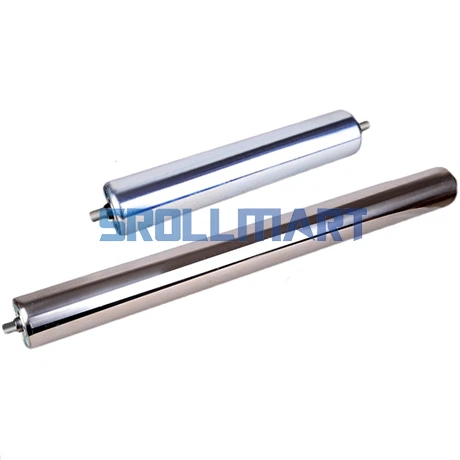

The Stainless Steel Non - Power Roller is a prime example. Stainless steel gives it a long lifespan, and it can operate smoothly even in harsh environments. It's commonly used in assembly lines where workers need to move products from one workstation to another. You can easily customize the length and width of the conveyor according to your specific needs.
Low - Friction Conveyor Rollers
Low - friction rollers are designed to reduce the amount of force needed to move items along the conveyor. They use special bearings or surface coatings to minimize friction. This is especially important when you're dealing with lightweight or delicate products.
The Low - Friction SUS Conveyor Roller is a top - notch choice in this category. The low - friction design ensures that products can glide smoothly, reducing the risk of damage. It's also energy - efficient because less power is needed to move the items. These rollers are often used in industries like electronics manufacturing, where precision and gentle handling are key.
Precision Conveyor Rollers
Precision rollers are engineered for applications that require high accuracy. They have tight tolerances in terms of diameter, roundness, and surface finish. These rollers are crucial in industries such as printing and packaging, where products need to be aligned perfectly.
They're made with high - quality materials and advanced manufacturing processes. The bearings in precision rollers are also of superior quality to ensure smooth and accurate rotation. This type of roller may be more expensive, but the precision it offers can significantly improve the overall efficiency and quality of the production process.
Impact Conveyor Rollers
Impact rollers are built to withstand heavy impacts. They're commonly used in industries where products are dropped onto the conveyor or where there's a lot of rough handling. Mining and recycling are two industries that often use impact rollers.
These rollers have a robust construction, with thick walls and strong bearings. They can absorb the shock of heavy objects and prevent damage to the conveyor system. Impact rollers may need to be replaced less frequently compared to other types, which can save you money in the long run.
Tapered Conveyor Rollers
Tapered rollers are shaped in a way that the diameter at one end is different from the other. This design is used to change the direction of the product on the conveyor. They're often used in curved conveyors or to guide products into specific lanes.
The tapered shape helps to steer the products smoothly around curves without causing jams. They're an essential component in conveyor systems that require complex routing of products, such as in large distribution centers.
Magnetic Conveyor Rollers
Magnetic rollers use magnets to hold and move ferrous materials. They're commonly used in industries like metalworking and recycling. The magnets ensure that the metal products stay in place on the conveyor and can be transported efficiently.
Magnetic rollers come in different strengths and configurations depending on the type of metal and the application. They can be a great solution for handling metal parts that are difficult to grip or move using traditional methods.
Belt Conveyor Rollers
Belt conveyor rollers are used in belt conveyor systems. They support the conveyor belt and help it move smoothly. There are different types of belt conveyor rollers, including drive rollers, idler rollers, and tensioning rollers.
Drive rollers are powered and are responsible for moving the belt. Idler rollers support the belt and help to maintain its shape. Tensioning rollers are used to adjust the tension of the belt. These rollers need to be carefully selected based on the size, weight, and speed of the belt conveyor system.
Conclusion
As you can see, there are many different types of conveyor rollers, each with its own unique features and applications. Choosing the right type of roller for your conveyor system is crucial to ensure its efficiency and longevity. Whether you need a simple gravity roller for a small warehouse or a precision roller for a high - tech manufacturing process, I've got you covered.
If you're in the market for conveyor rollers, I'd love to have a chat with you. We can discuss your specific requirements and find the perfect solution for your business. Don't hesitate to reach out and start the conversation about your conveyor roller needs.
References
- General knowledge from years of experience in the conveyor roller industry.
- Industry - specific research on conveyor systems and their components.